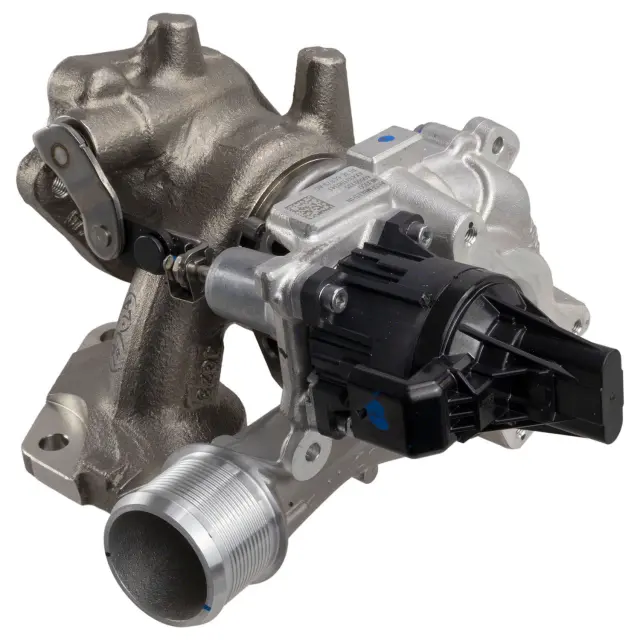
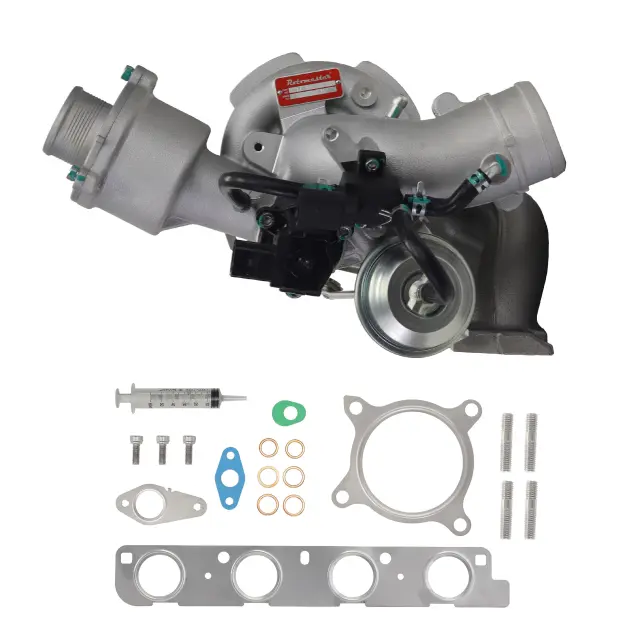
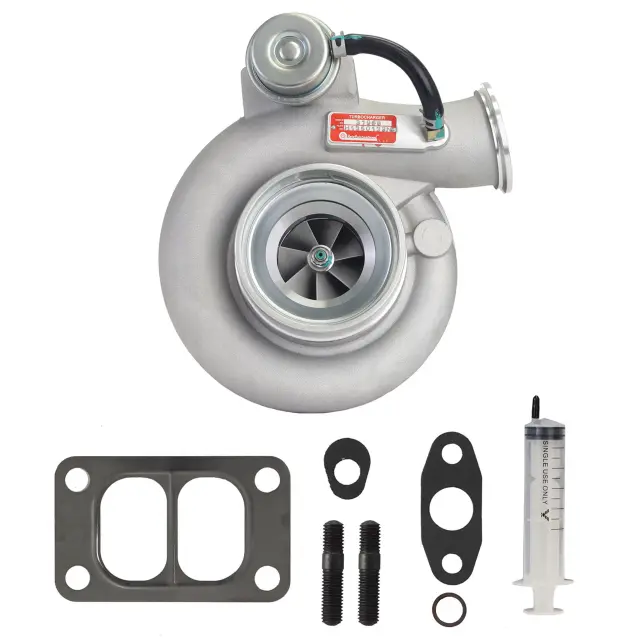
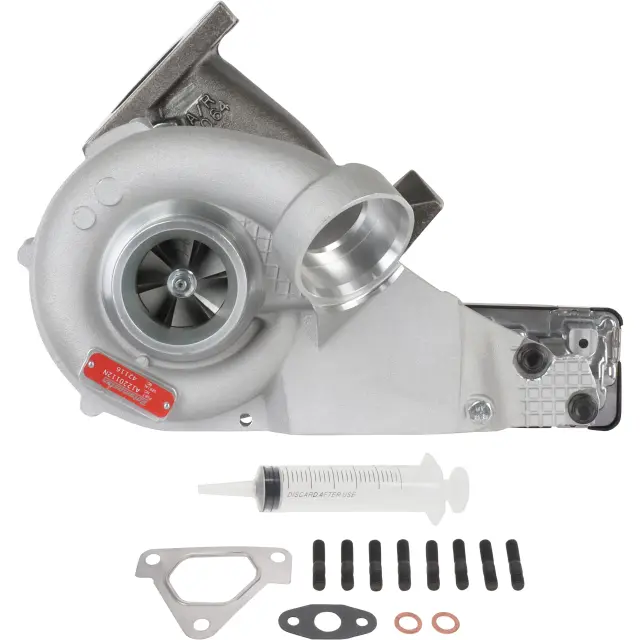
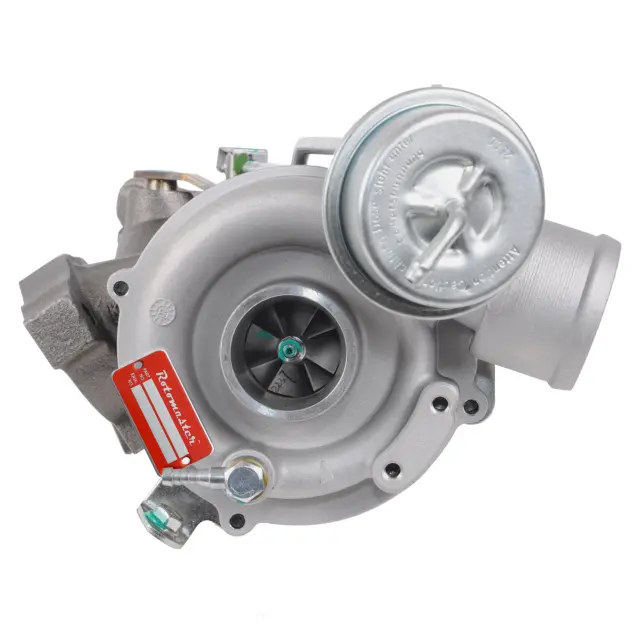
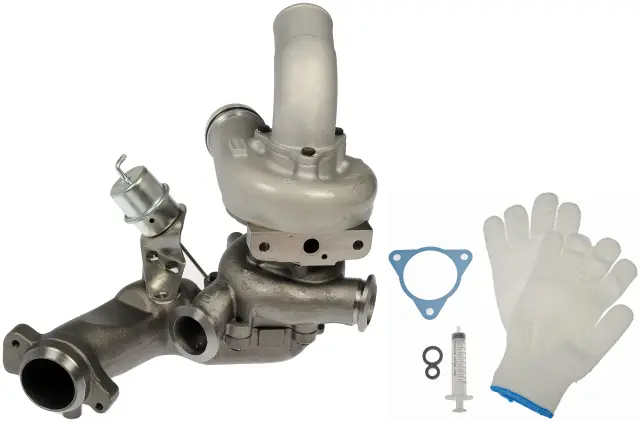
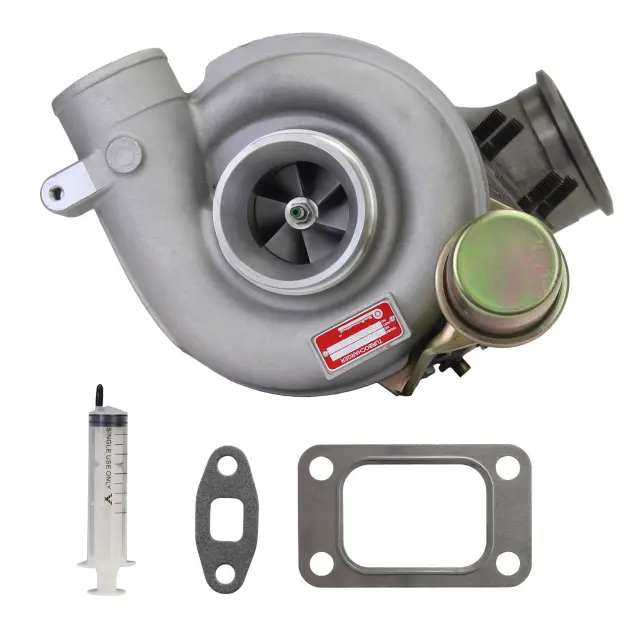
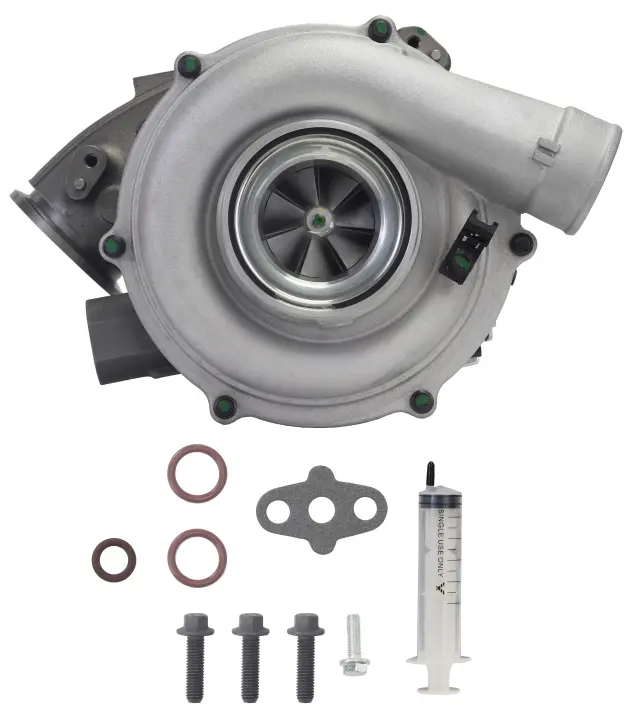
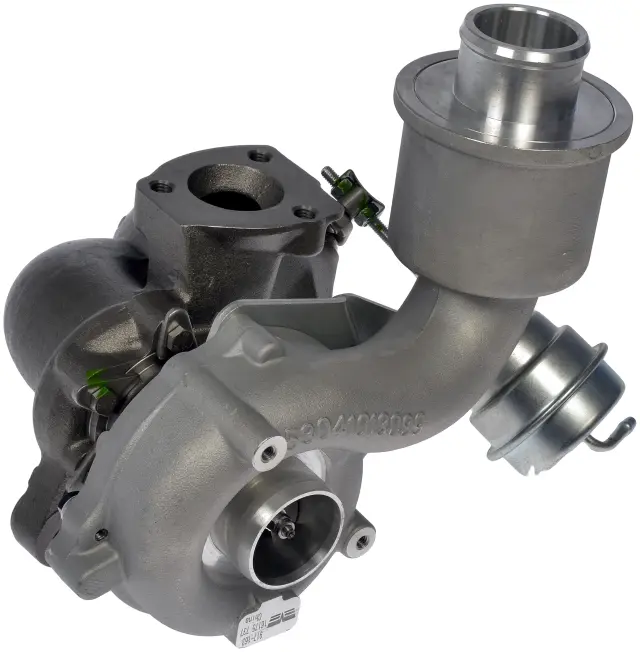
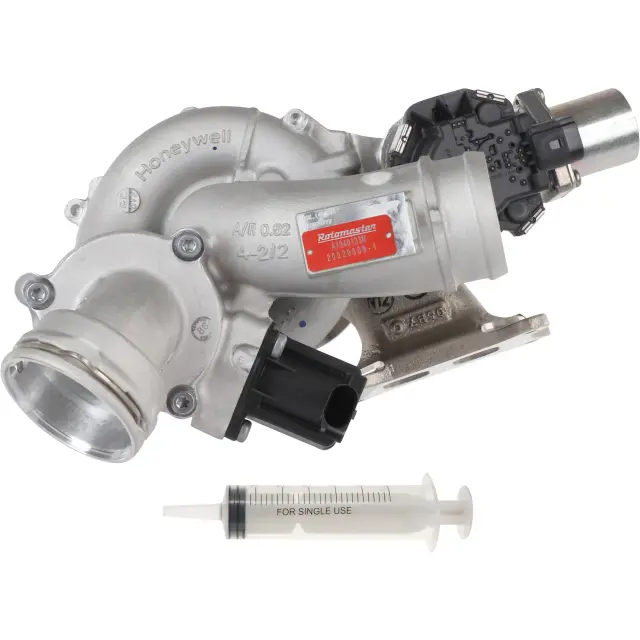
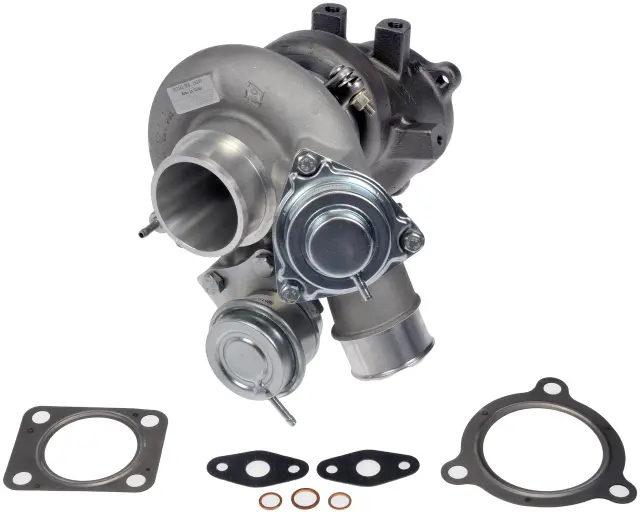
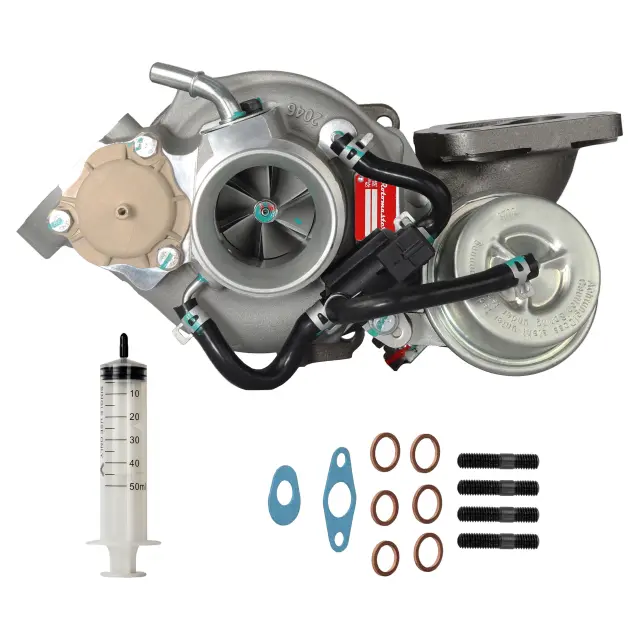
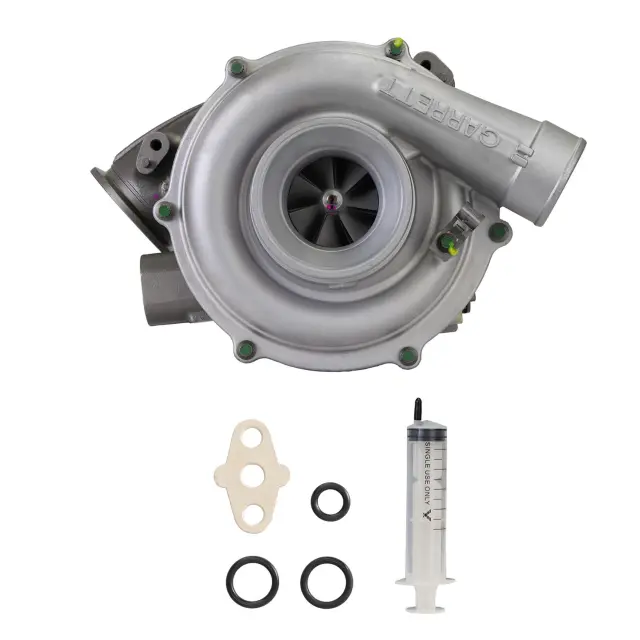
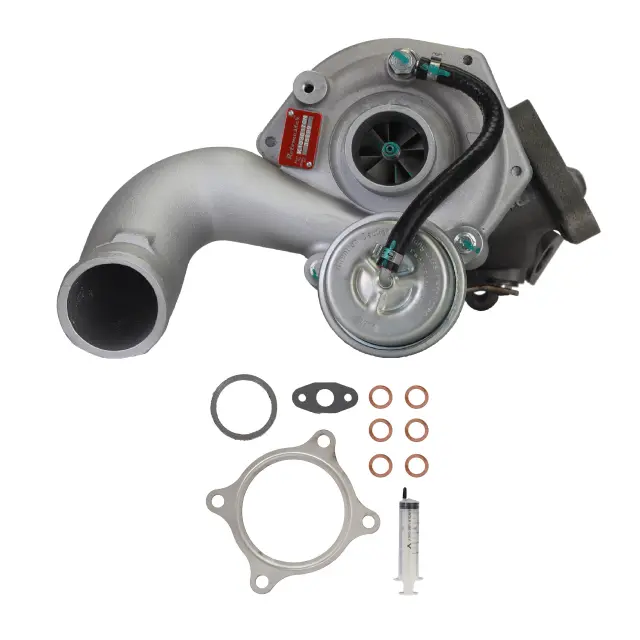
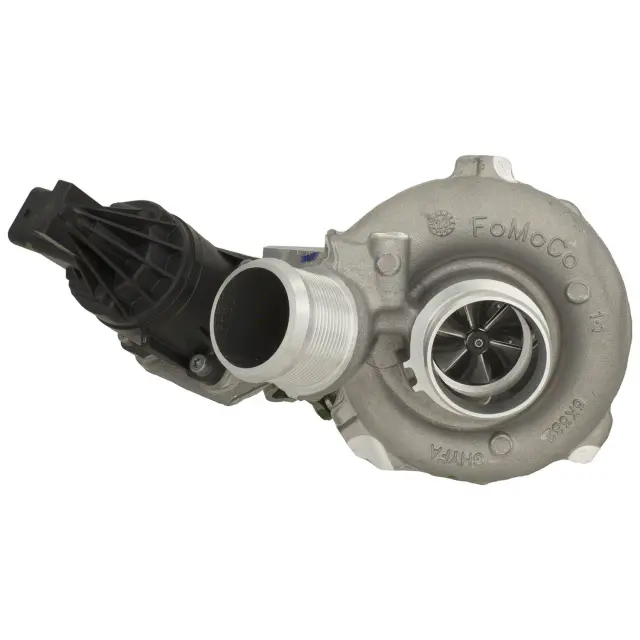
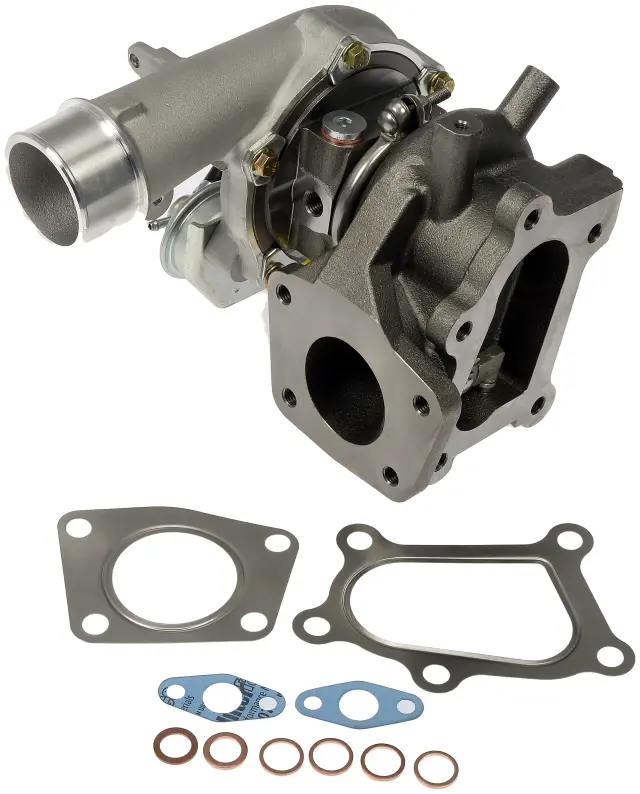
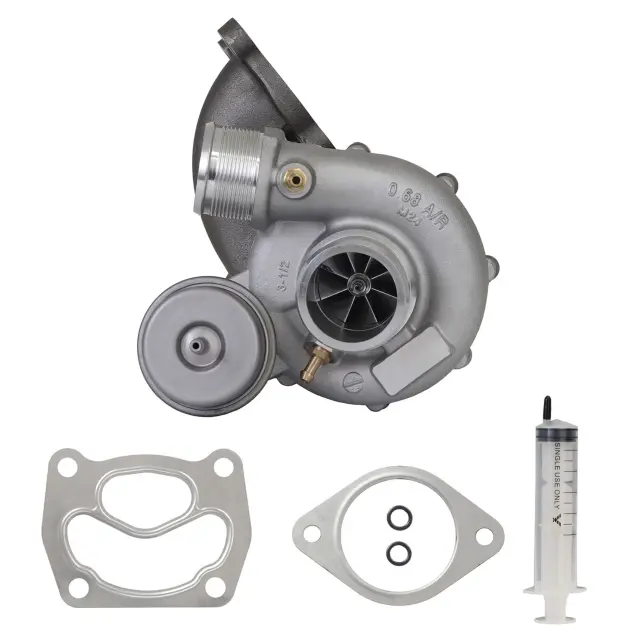
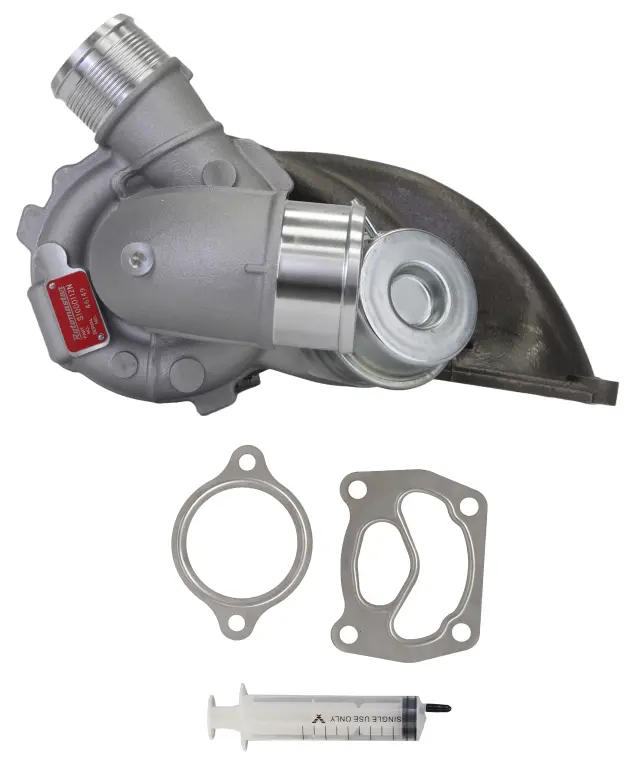
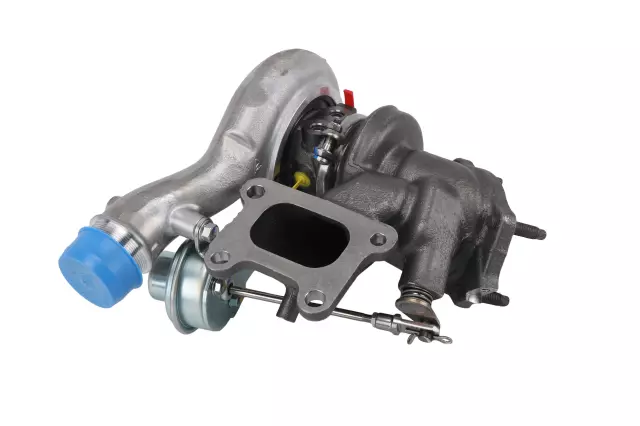
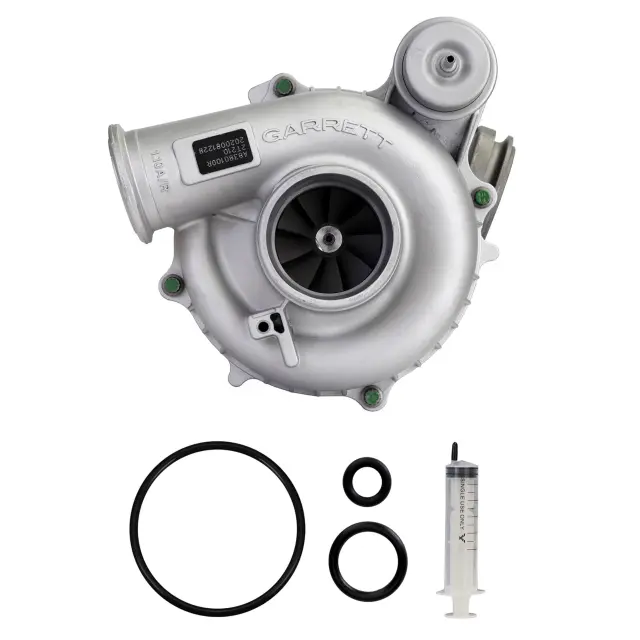
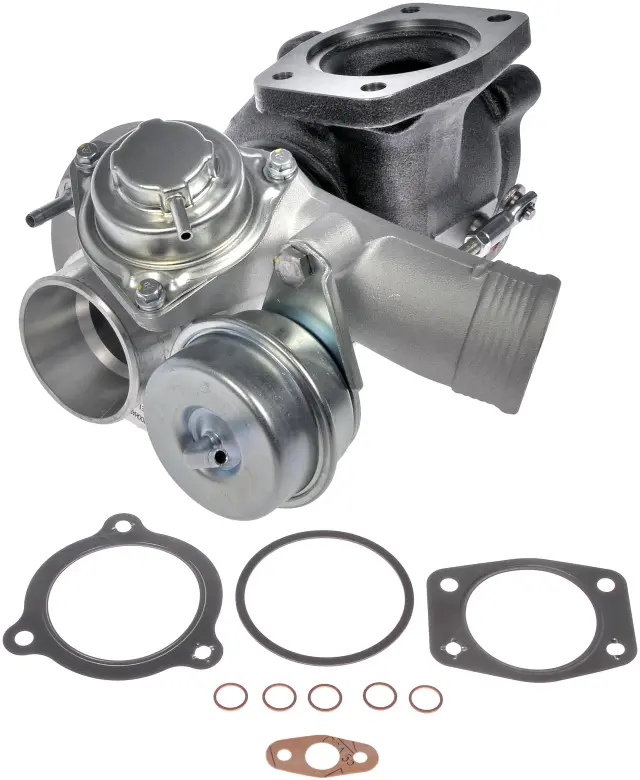
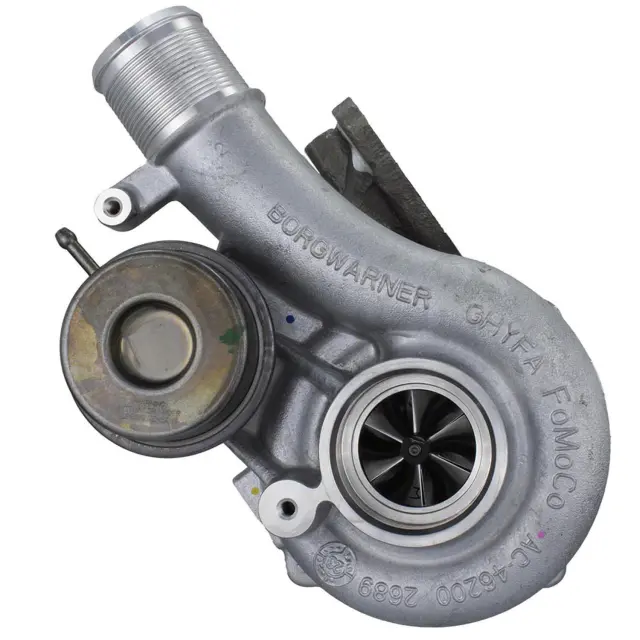
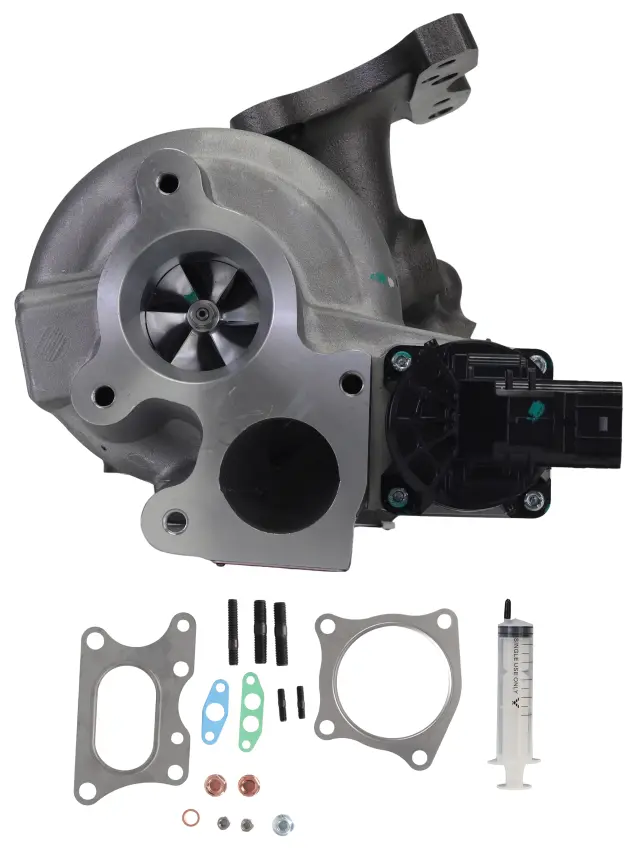
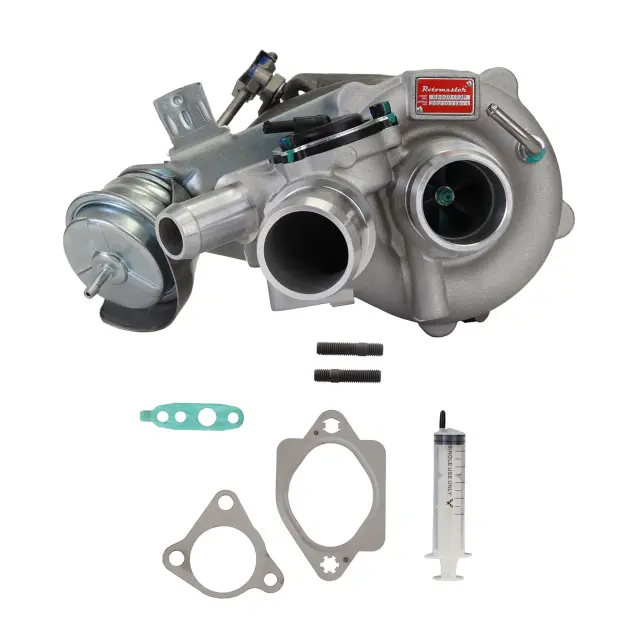
A turbocharger uses exhaust pressure that would otherwise be wasted to spin a turbine, and the turbine drives a compressor on the same shaft that forces more air into the engine. More air means more fuel can be burned, which is why a turbocharged engine makes the power of a much larger engine at the weight and displacement of a smaller one. Almost every diesel pickup sold in the United States since the late 1990s is turbocharged, and gasoline turbos have spread from performance models to ordinary family SUVs over the last fifteen years.
This category holds 254 complete assemblies covering model years 1993 through 2026. Rotomaster supplies the largest share with 159 listings, followed by Motorcraft with 54, Dorman with 24, and ACDelco with 13. Ford applications dominate at 85 listings - the F-150 alone accounts for 22, with the Expedition, Explorer, F-250 Super Duty, Escape and Edge close behind - and the rest spread across Chevrolet, Dodge, Audi, Volkswagen, Buick, Subaru, Cadillac, Hyundai and Mazda.
Every listing here is a complete assembly rather than a cartridge or a repair kit, and none are universal fit. Match the part number, not the model year. The same engine was frequently offered with two different turbo sizes across a production run, and on V6 and V8 applications there is usually a distinct left and right unit - 36 listings here are left side, 32 are right side, and 2 are rear-mounted. Fitting a right-side unit to the left bank will bolt up and then foul the steering shaft or the frame rail.
Failure usually announces itself before the unit seizes. Blue smoke from the tailpipe under acceleration means oil is passing the piston-ring seal on the turbine side. A siren-like whistle that rises and falls with boost points at worn journal bearings. A P0299 underboost code with no boost leak found anywhere in the charge piping is the compressor wheel losing efficiency. Pull the intake hose and look at the compressor blades: contact with the housing, bent fins or heavy oil residue all mean replacement rather than repair.
Installation decides how long the replacement lasts. Turbochargers fail from oil starvation far more often than from wear, so clean or replace the feed line rather than reusing it, confirm the drain line runs downhill to the sump without a kink, and prime the bearing housing with clean oil before the first start. Change the oil and filter in the same job, and find out what killed the original unit - a restricted feed line or a failed air filter will take out the new one just as quickly.
The turbocharger bolts to the exhaust manifold, so a cracked manifold, a blown gasket or broken studs at that joint usually get replaced at the same time. Those parts sit in the Exhaust Manifolds & Headers category. Check the oil supply and return hardware on the listing before ordering, because some assemblies ship with new lines and some do not.
